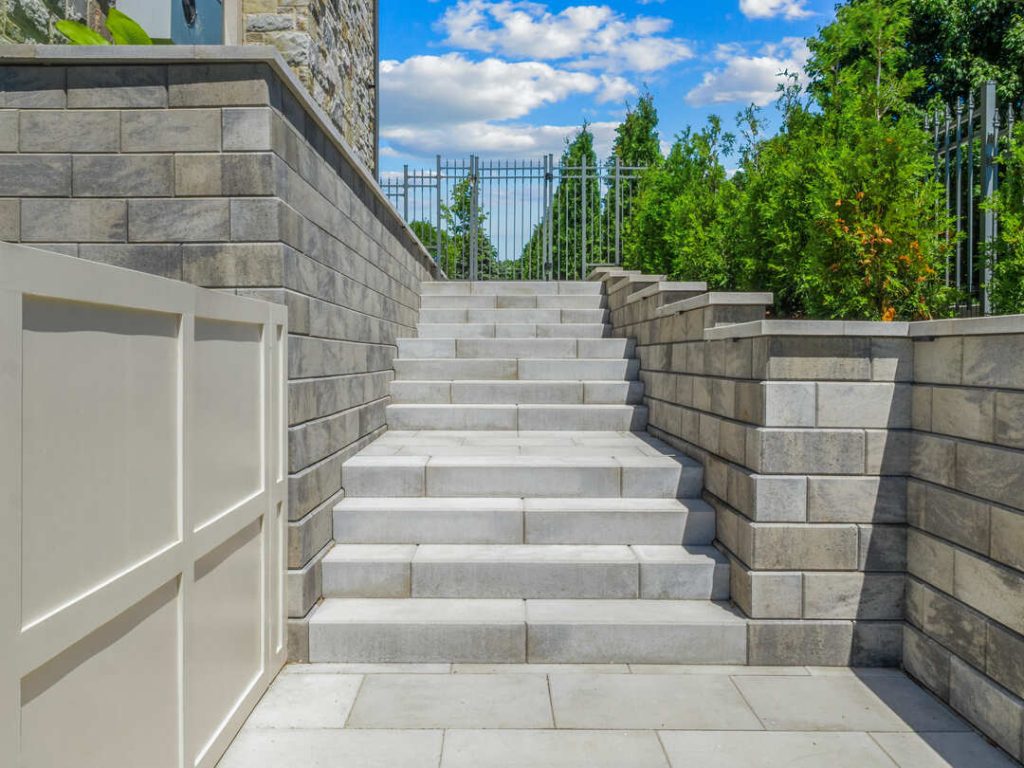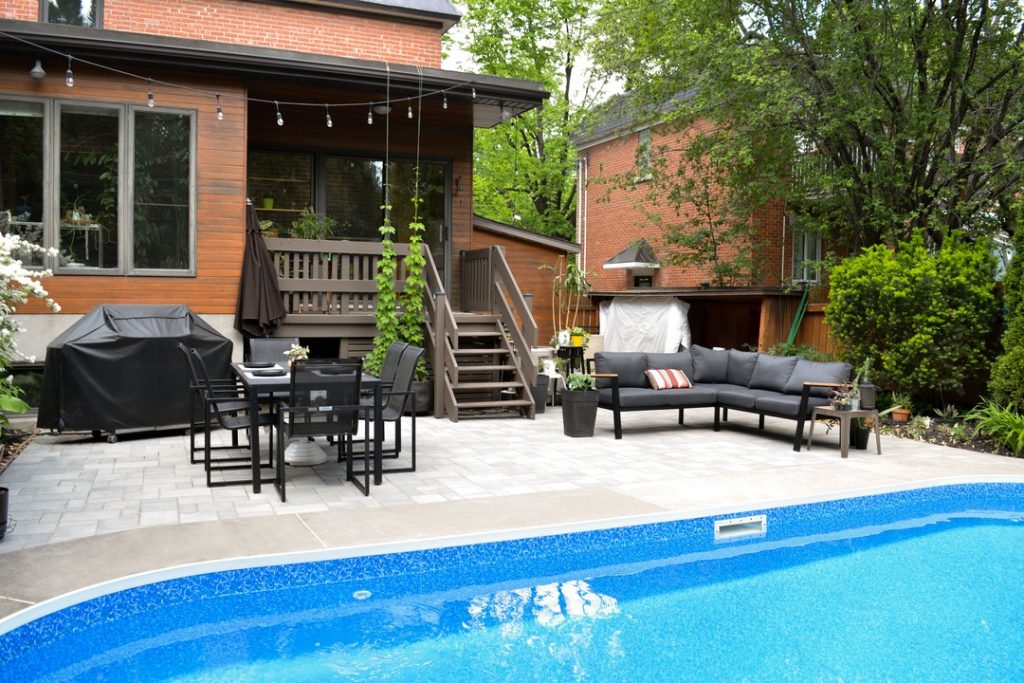

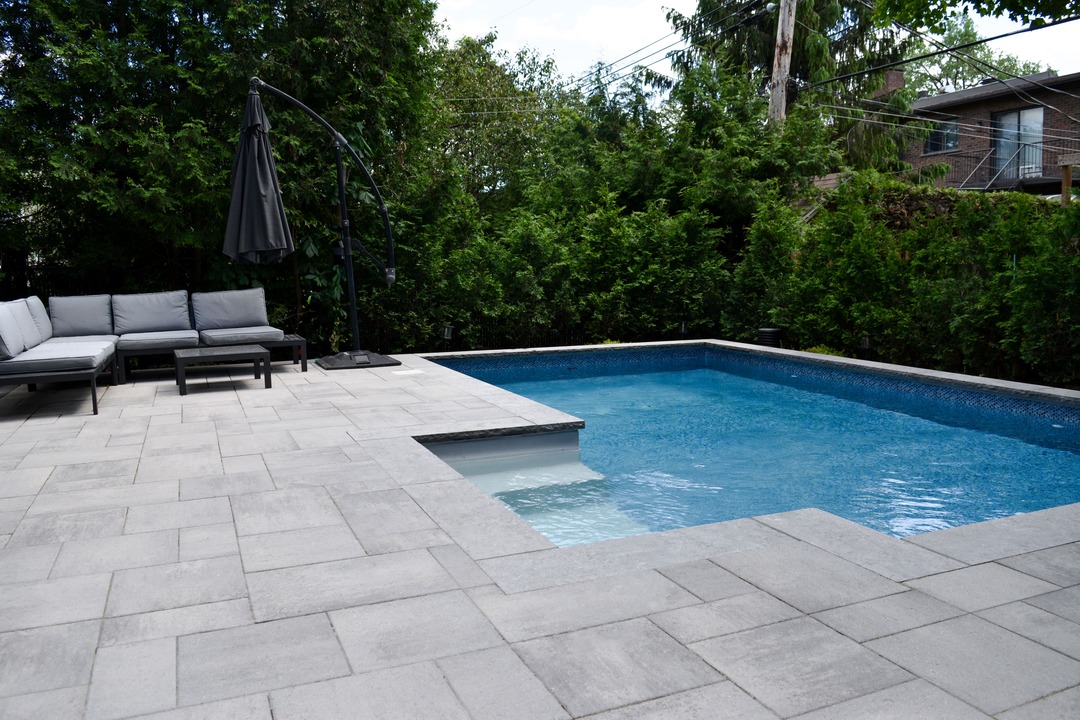
It’s something we hear all the time: “paving stones move, they shift and warp over time.” And we won’t hide it, it’s true: with freeze-thaw cycles, paving stones can shift slightly during the winter. But once the ground thaws, they settle back into place and the surface stays level.
But that movement isn’t a manufacturing defect or a sign that the installation failed. It’s exactly the opposite: it’s what makes paving stones the material best suited to our climate. That’s our reality: Quebec soil moves. So the smart choice isn’t finding a surface that refuses to move, it’s choosing one that was designed to move without breaking.
In this article, we debunk this popular belief and explain why paving stones are designed to absorb ground movement, why asphalt and concrete often fare worse, and what you really need to watch for if you want a long-lasting landscape.
Yes, paving stones move, and that’s intentional
Unlike a surface poured in one piece, a paving stone surface is made up of hundreds, sometimes thousands, of small individual units laid side by side. Each paver can shift slightly independently of the others, absorb pressure, then settle back into place. It’s a flexible system, not a rigid slab.
This flexibility is a feature you should look for in your paving stones. A surface made of many small movable pieces will always handle ground movement better than a continuous surface that has to stay perfectly still to avoid cracking.
Quebec soil: freeze-thaw movement, year after year
In Quebec, the ground is never truly stable. In the fall, the water in the soil starts to freeze. As it freezes, it expands and lifts the ground. In the spring, that same ground thaws and settles again. This cycle repeats every year, sometimes even several times a season during winter thaws.
How much the ground moves depends on several factors: the type of soil (clay generally moves more than sand), whether or not there is good drainage, the frost depth in your region, and the quality of the base installed under the surface. That’s why we avoid giving one-size-fits-all answers about excavation depth or the type of base required: every property has its own conditions, and that’s exactly what we assess before proposing a solution.
The key takeaway is that this ground movement isn’t an anomaly. It’s the nature of the climate we live in. The real question isn’t “how do I stop the ground from moving?” but rather “which surface can follow that movement without deteriorating?”
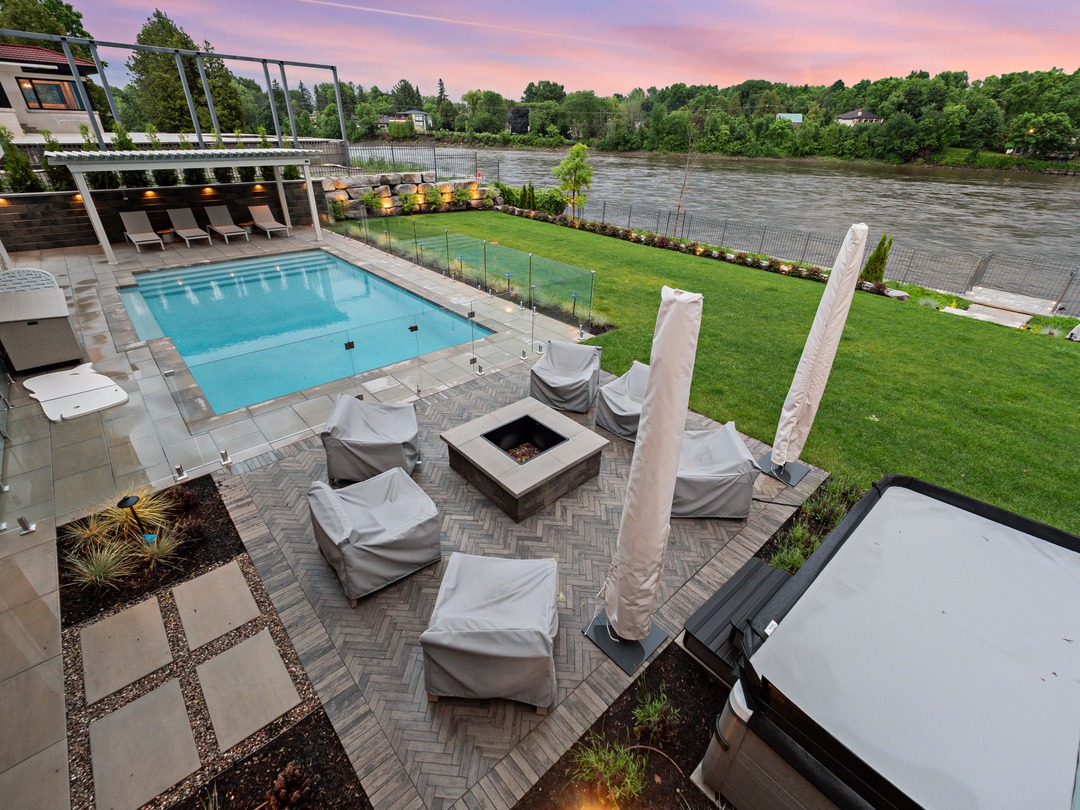
Asphalt and concrete: when movement becomes a permanent crack
Asphalt and concrete are monolithic materials, meaning they form a single continuous surface, poured or compacted in one piece. That rigidity has its advantages, but it also comes at a price when the ground underneath starts to move.
When freeze-thaw lifts or settles a section of ground under an asphalt driveway or a concrete slab, the surface has no way to absorb that movement. It ends up cracking. And unlike paving stones, a crack in asphalt or concrete doesn’t “settle back” on its own. It stays there, grows over time and lets water seep in, which speeds up the deterioration even more.
It’s more or less the opposite of paving stones: the more a material resists movement, the more it ends up paying the price visually. Paving stones, on the other hand, don’t need to resist. They’re made to follow.
How paver joints absorb ground movement
If paving stones can move without becoming permanently deformed, it’s largely thanks to the joints between each paver. These small gaps, filled with sand or jointing material, absorb the ground’s micro-movements, allow slight flexibility between pavers, and keep pressure from concentrating on a single point.
When the ground moves under a well-executed paving stone installation, the pavers shift slightly relative to one another instead of cracking. That’s why a properly installed paver driveway can go through many freeze-thaw cycles without showing visible damage, even though, technically, it “moves” every year.
Polymeric sand: a shock absorber first and foremost
It’s probably the question we’re asked most often: what is the sand in the joints really for? For several years now, most installations have used polymeric sand rather than regular sand.
This sand contains a binder that hardens once activated, usually with water, while keeping some flexibility between the pavers. It plays two distinct roles. On one hand, it acts as a shock absorber: it lets the joints handle small ground movements without washing out or crumbling over time. On the other, it forms a barrier that limits water infiltration under the pavers and makes life much harder for weeds that tend to take root between the joints.
It’s a detail that may seem minor when you’re making your choice, but it directly affects the durability and long-term maintenance of a paving stone installation.
Sinking over the years? It can be fixed without redoing everything
If, over the years, a section near a drain or a heavily used walkway ends up sinking, the pavers aren’t to blame: it’s usually a sign that the base or drainage in that spot needs to be reviewed.
The good news is that this kind of situation is easy to fix, without redoing everything. We remove the affected pavers, recompact the base, adjust the
grading, then put the same pavers back. The result is practically invisible: the repaired section looks just like it did originally, as if nothing had happened.
That’s one of the big advantages of paving stones over asphalt or concrete: we’re not talking about demolishing and repouring a section, just readjusting what has moved. If you notice this kind of sinking at your home, don’t hesitate to contact our team to assess the situation.
The real problem is never the pavers: it’s the base
When a paving stone installation becomes noticeably deformed, sinks unevenly or stays unstable year after year, the material is almost never to blame. The problem is usually below the surface, at the base.
A well-built base requires proper soil compaction, granular material suited to the site, and careful attention to drainage to keep water from pooling under the pavers and weakening the base over freeze-thaw cycles. When these steps are rushed or poorly adapted to site conditions, the pavers will indeed move excessively, not because they’re poorly designed as a material, but because they didn’t get the solid base they need to perform well.
In practical terms, for a driveway or a parking area, we often talk about an excavation of around 18 to 24 inches deep, with a minimum slope of about 2% to direct water away from the pavers rather than letting it pool underneath. These are reference values, not fixed rules: clay soil, a property that was poorly drained to begin with or heavier use than planned (such as regular vehicle traffic) may call for adjustments to these benchmarks.
That’s why the choice of contractor often matters more than the choice of paver itself. A good base, suited to the soil type and intended use, makes all the difference between a landscape that ages well for decades and one that always seems to “move too much.”
How surfaces compare against freeze-thaw in Quebec
To sum up what we’ve just covered, here’s how the three main surfaces hold up against the freeze-thaw cycles typical of Quebec’s climate: