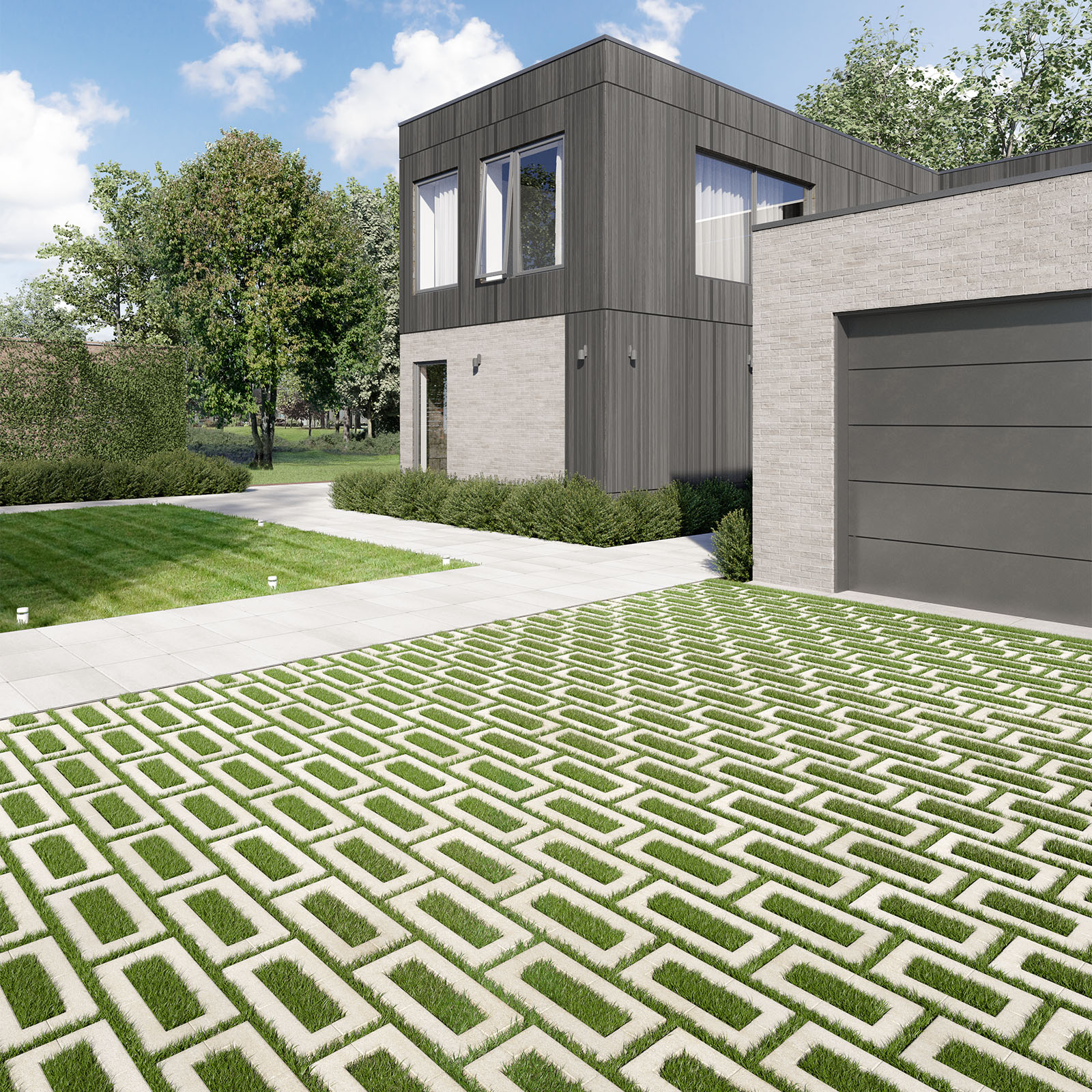
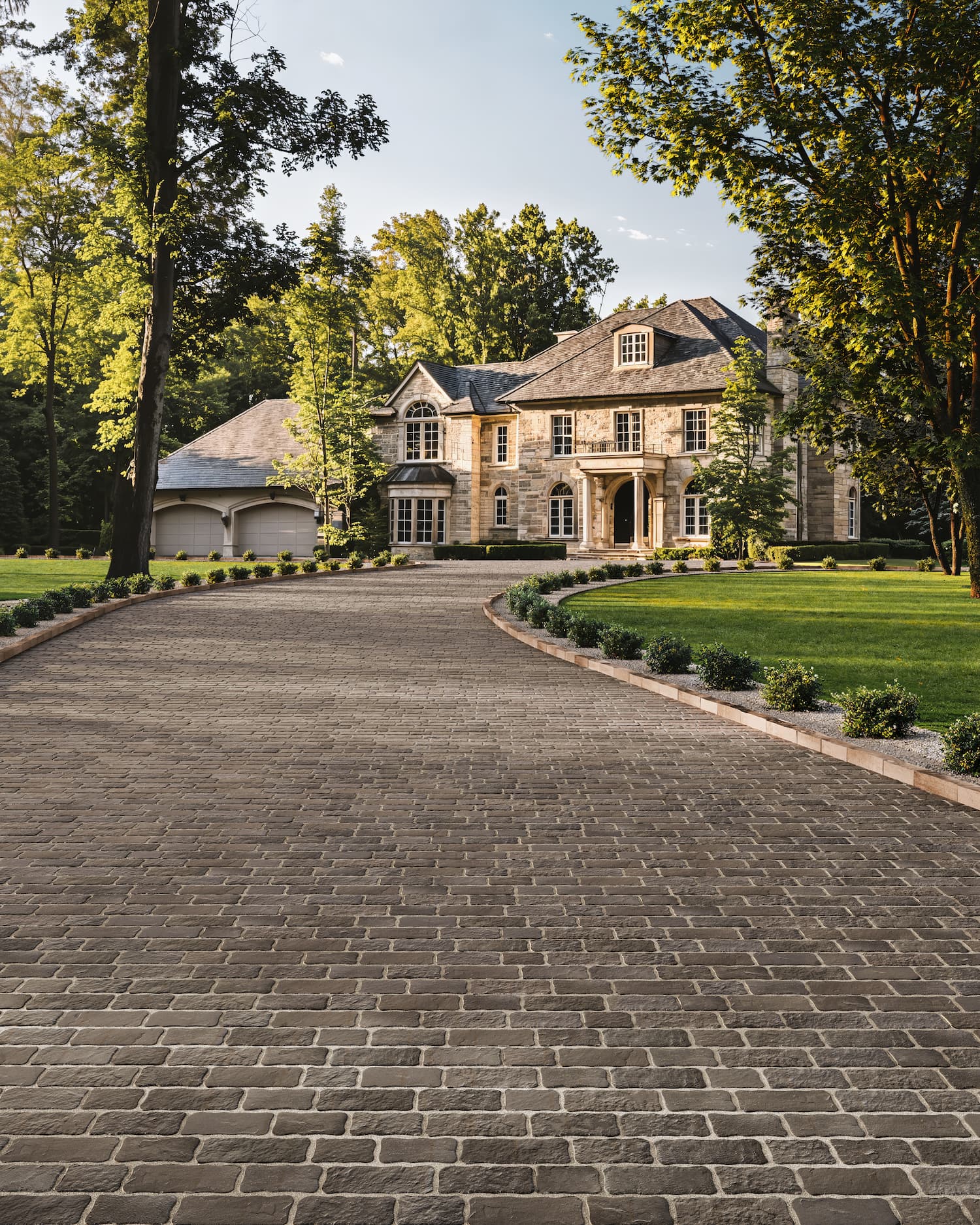
Permeable pavers let rainwater pass through the surface and infiltrate into an engineered base below, instead of running off toward the street, the neighbour’s lot or your own foundation.
Paysagement Duguay designs and installs permeable paving in Laval, Montreal and the North Shore, sized to the actual conditions of each site — soil type, slope, surface area and the volume of water the surface has to absorb.
"*" indicates required fields
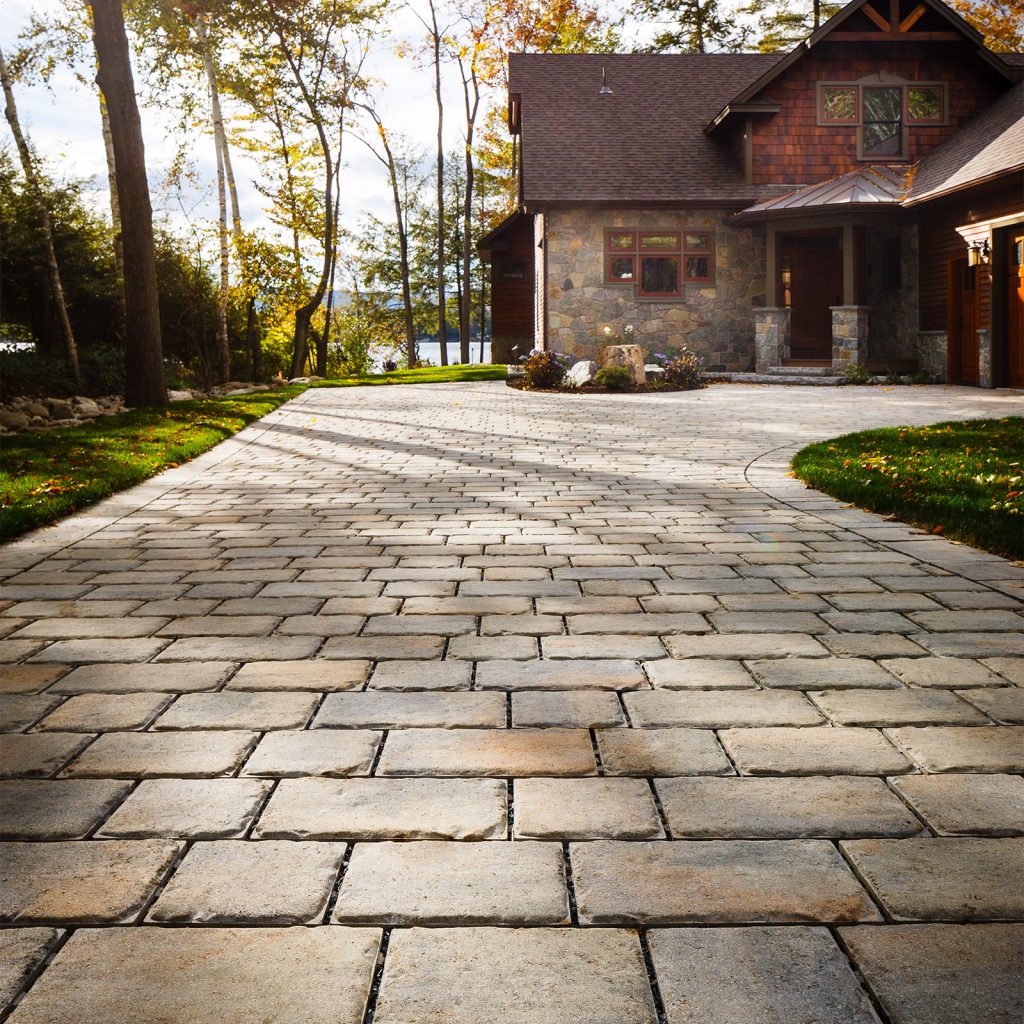
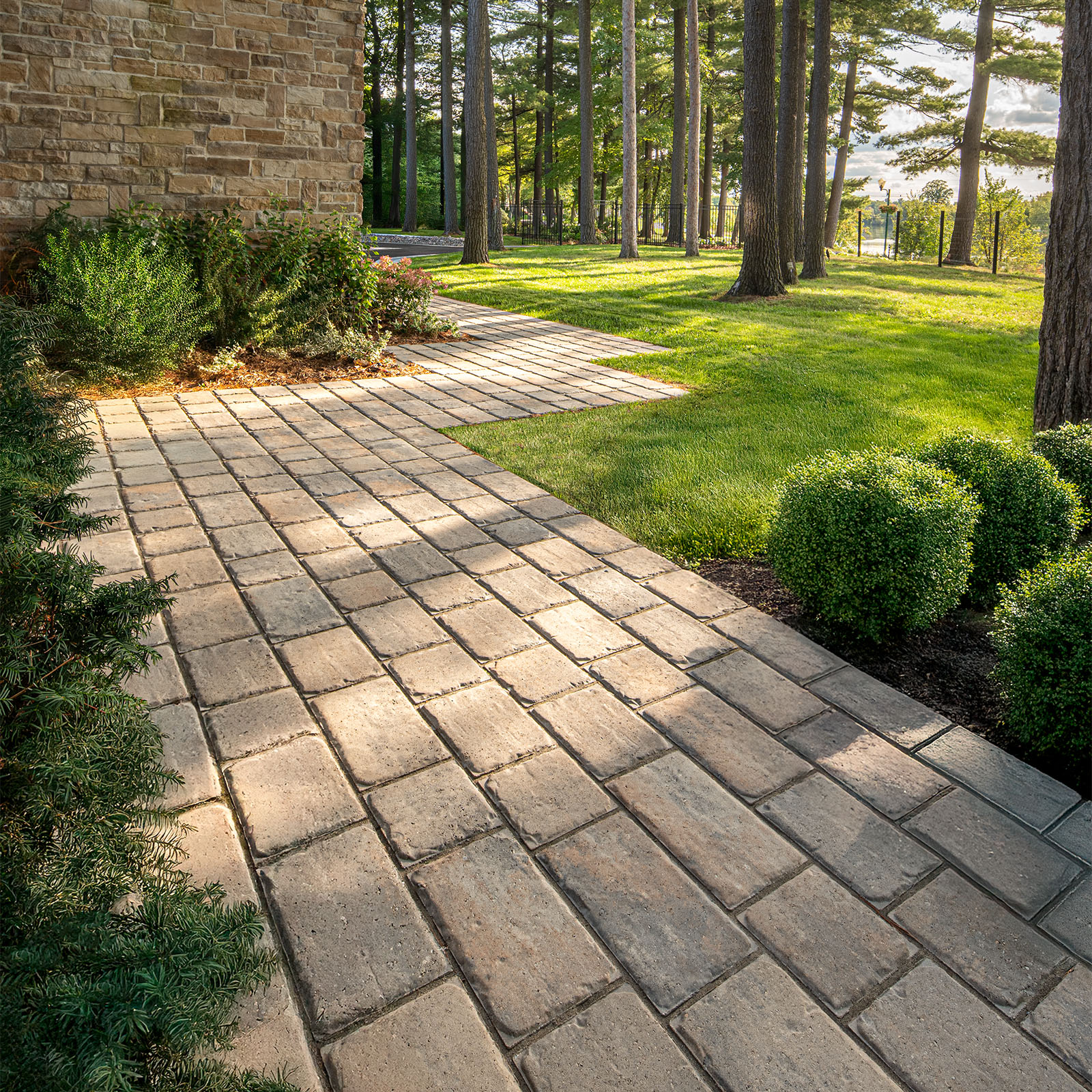
A standard installation rests on a compacted granular base with joints filled by polymeric sand, which limits vertical infiltration. Water management depends on surface slope, perimeter drainage and municipal infrastructure.
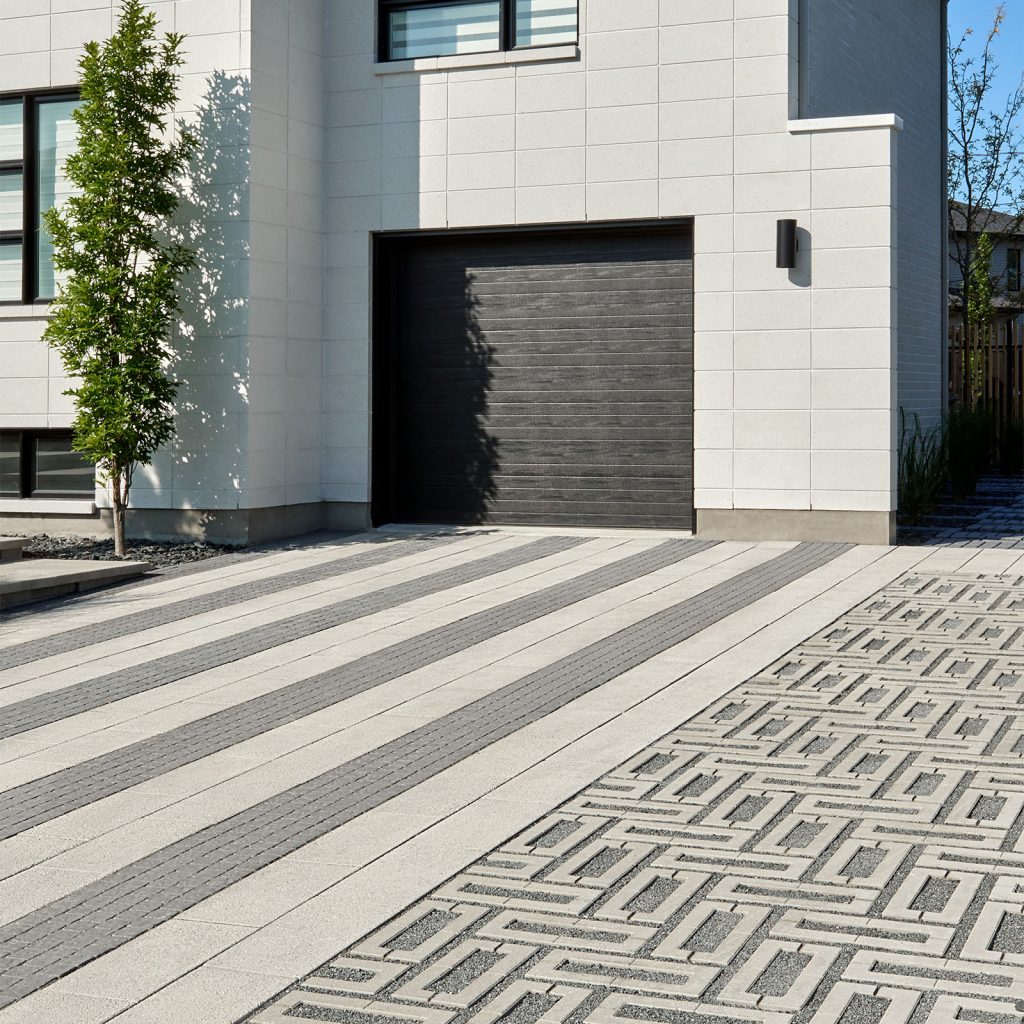
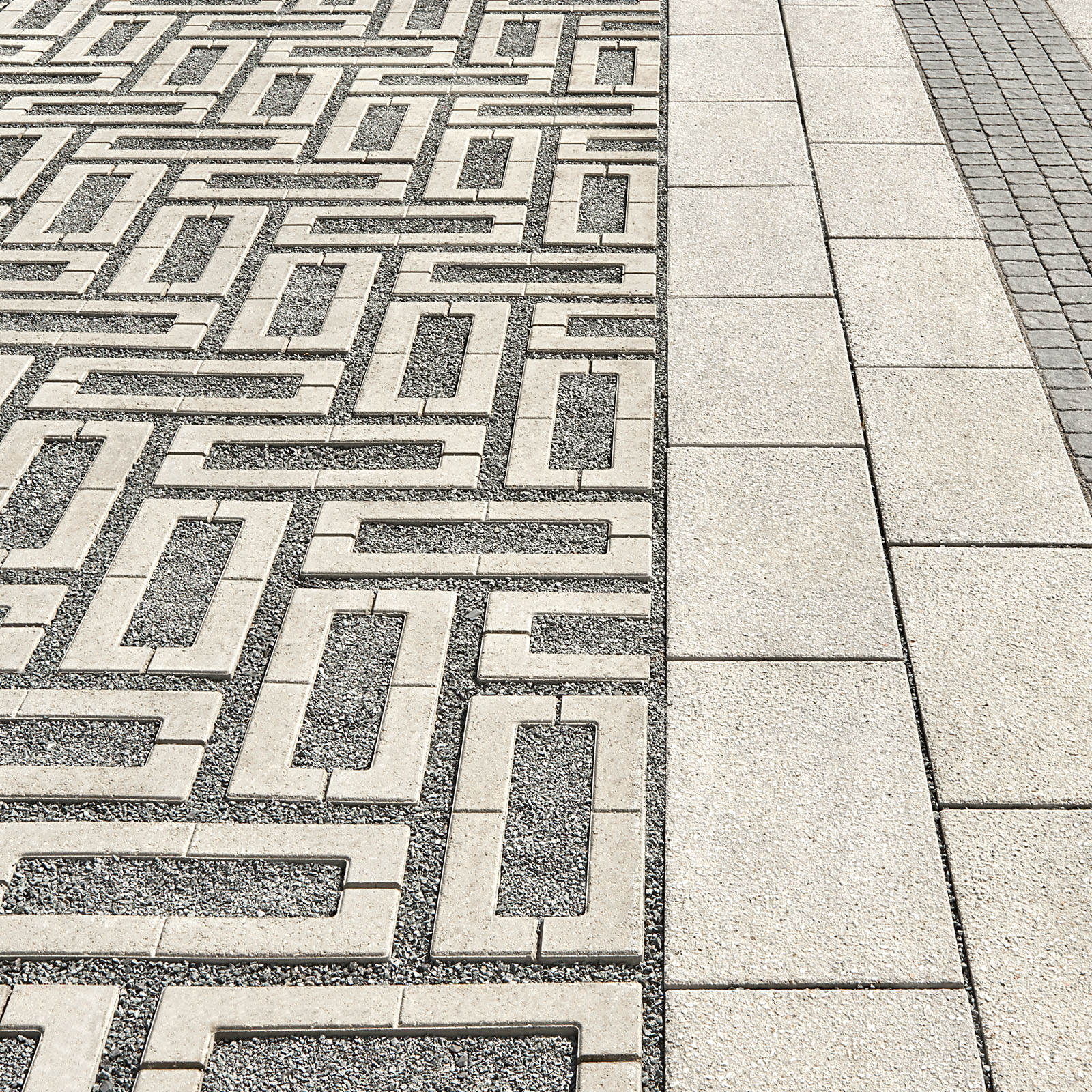
Permeable pavement works on a different logic: open-graded stone joints and a deep clear-stone reservoir turn the surface itself into part of the drainage system, storing water and releasing it slowly into the soil.
Standard paving stones are the right choice when the property already drains well and the soil disperses water effectively. It is not the wrong option — it is a different one.
Permeable pavers make sense when runoff has nowhere to go, when the municipality restricts impermeable surface area, or when you want to reduce puddling and ice formation on a driveway.
A permeable driveway carries vehicle loads just like a conventional paving stone driveway. The difference is underneath: a thicker reservoir of clear stone, no fines, and a geotextile separation layer.
Permeable driveway installation requires an infiltration assessment before design. We check soil composition and the water table so the reservoir is sized for real conditions rather than a standard specification.
Step 1: Design and planning
We start by designing the full system: paver selection, drainage layout, and surface grading all work together to deliver both a clean finish and strong stormwater performance.
Step 2: Excavation and subgrade preparation
We adjust grades and remove any unsuitable soil. This step is especially important on clay-heavy ground, where saturation is a real concern without proper preparation.
Step 3: Draining foundation
We install geotextile fabric, clean crushed stone, and carefully controlled compaction to build a foundation that can handle infiltration and water storage over time.
Step 4: Permeable paving stone installation
Each paver is set evenly with the spacing needed to let water flow through the joints and reach the draining layer below.
Step 5: Finishing
Joint filling, light compaction, and edge restraint installation lock everything in place. We verify drainage performance as part of the final walkthrough.
Dealing with standing water after rain or looking for a smarter way to manage runoff around your property? Permeable paving stones are a durable, long-term solution that tackles the problem at the source.
Our team will guide you through the design and installation of a permeable paving system built around your terrain, your needs, and the actual conditions on site.
Yes. Permeable paving stones are designed to carry residential loads, including driveways. They manage stormwater directly at the surface by letting it infiltrate rather than run off toward the street or sewer system.
Not when the system is properly installed. The 1/8″ clear stone fill stays in place and continues to drain effectively. Some light maintenance may be needed over the years, but there is no significant upkeep under normal conditions.
Yes. By draining water away before it has a chance to freeze at the surface, permeable paving actually reduces the ice-related stress that leads to cracking and shifting. It tends to perform particularly well on clay soils, which are common throughout Laval and the North Shore.

Not always. Permeable paving works as a complementary system that manages water at the source. Depending on the project, it can significantly reduce the need for more complex drainage infrastructure, but it is rarely positioned as a total replacement.