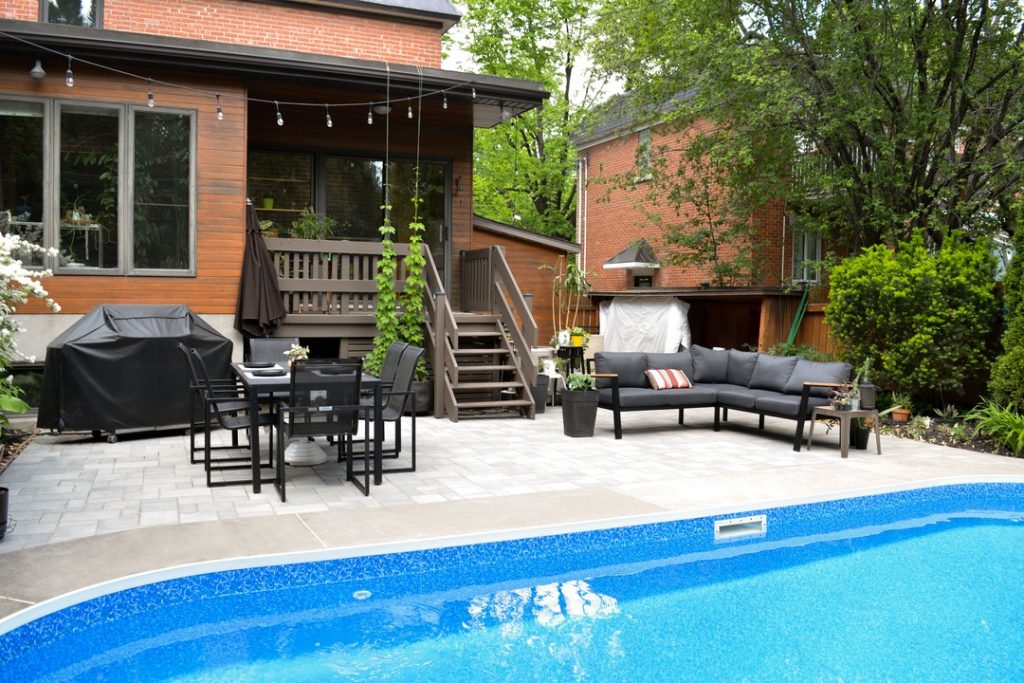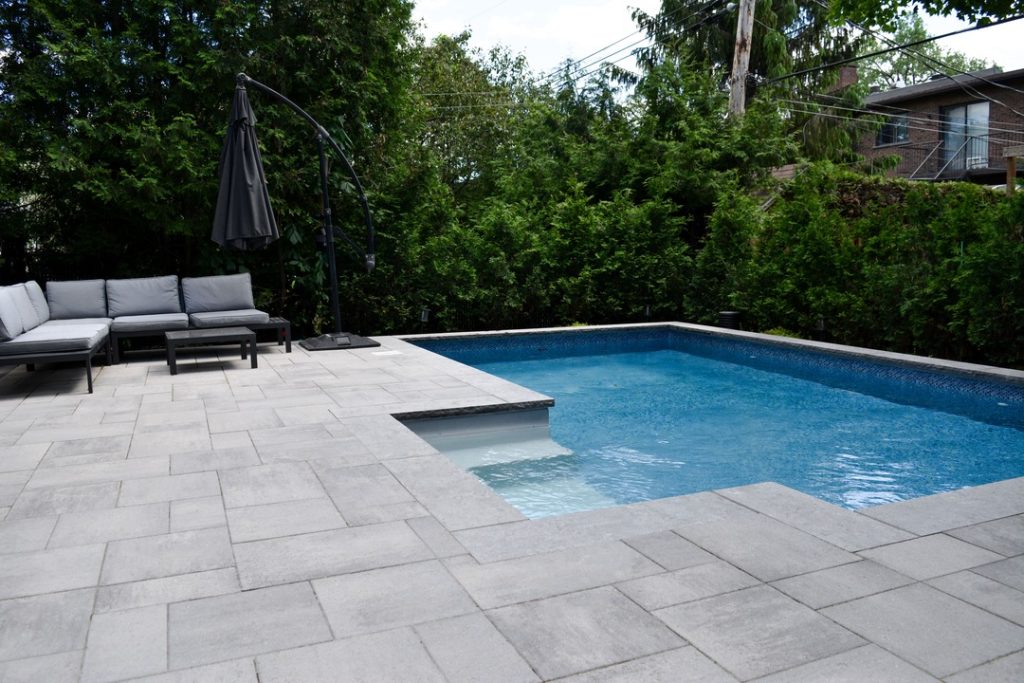

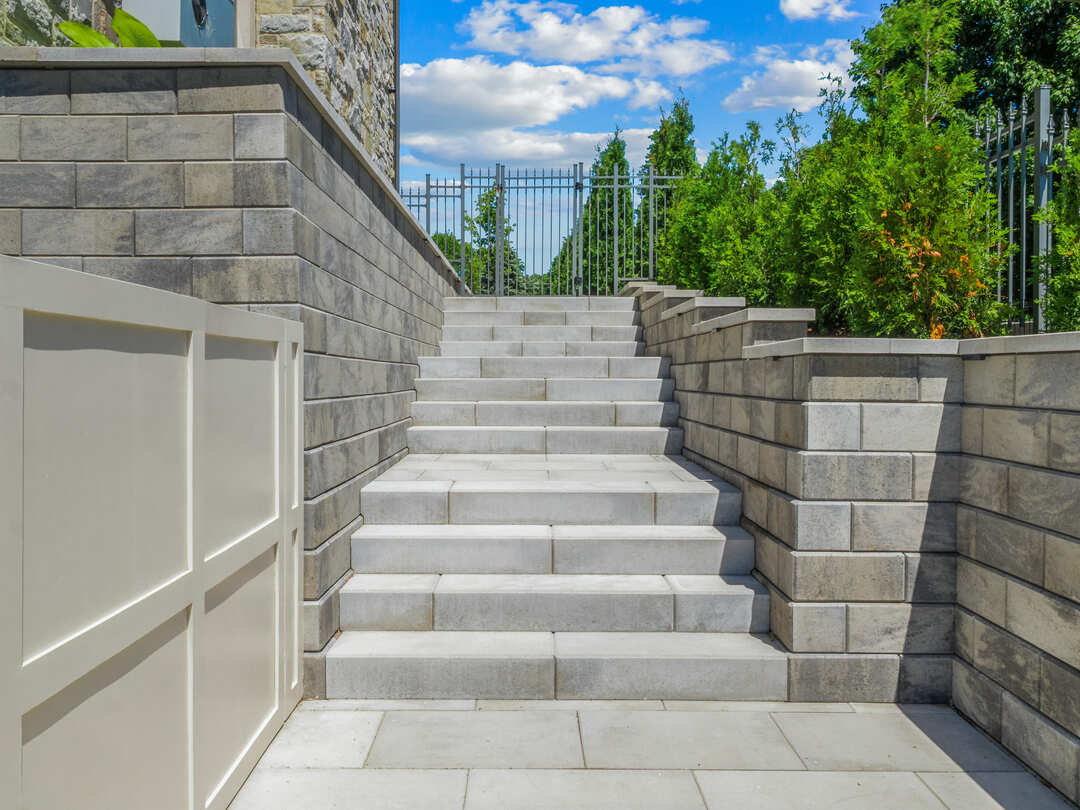
In terms of style, natural stone has an advantage that’s hard to replicate: every stone is unique, giving an organic result that blends well with a wooded lot or a property with country charm. Precast blocks, on the other hand, rely on consistent lines and textures designed for modern or more minimalist looks. Neither one is “better,” since the choice depends on the property’s architectural style.
Structurally, this is where the difference becomes more concrete. Precast blocks are manufactured with precise interlocking systems, designed from the outset to offer good strength at height. Natural stone can hold back a heavy load just as well, but it requires more fitting work, stone by stone, to achieve a stable assembly. That work calls for experience and a sharp eye to spot the pieces that fit well together.
In terms of predictability, precast blocks have uniform dimensions, which makes installation faster and easier to plan. Natural stone, with its varied shapes, requires constant adjustment, which can affect the pace of the job.
Budget-wise, natural stone generally involves more specialized labour and a longer installation time, which is often reflected in the overall price. Precast blocks allow for more predictable cost planning. That said, the final price of a retaining wall depends on many project-specific factors, including height, length, access and site preparation, and it’s hard to set a universal rule without assessing the site.
The Invisible Key Element: Drainage and Geogrid
Whatever material you choose, a retaining wall’s durability doesn’t depend only on what you see on the face. It depends above all on what’s installed behind it, in the area you’ll never see once the work is done.
Three elements are essential:
- 3/4″ clear stone backfill: this crushed stone, free of fine particles, lets water drain freely without building up hydrostatic pressure against the wall. Without this backfill, water accumulates behind the structure and significantly increases the risk of shifting or cracking.
- Perforated weeping tile: installed at the base of the wall, it collects the water that seeps into the backfill and carries it away before it builds up under the footing.
- Geogrid reinforcement: this high-strength synthetic mesh “ties” the wall to the backfill it holds back. It’s recommended for walls over 3 feet tall, or when there’s a steeper slope behind the wall. Without geogrid in these conditions, the wall’s long-term stability becomes much less certain.
It’s often what you can’t see that makes the difference between a wall that lasts for decades and one that starts to lean after just a few winters. You can see this in many of our projects: the visual result matters, but it’s the structure behind it that ensures it holds up over time.
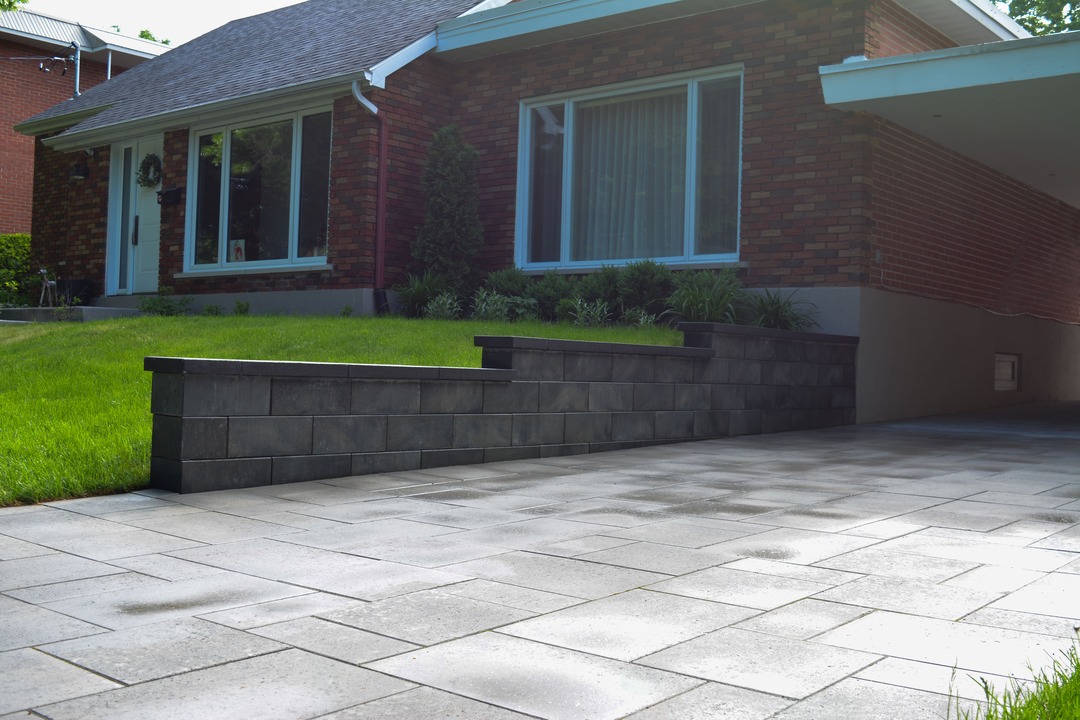
How to Choose the Material Based on Your Property
Before deciding between natural stone and precast blocks, a few questions can help guide the decision:
- How tall will the planned wall be? The taller it is, the more critical the structure behind it (drainage, geogrid, footing) becomes, regardless of the material visible on the face.
- What load will the wall need to hold back? A simple garden edging doesn’t have the same requirements as a wall supporting a driveway or a steep slope.
- Is there a significant slope behind the wall? A surcharge slope increases the pressure on the wall and may justify adding geogrid even below the height usually considered critical.
- What is site access like? A property that’s hard for machinery to reach can influence the choice of material and the installation time required.
- What is the overall budget for the project? Budget should never justify skipping drainage steps, but it can help steer the choice between the two materials.
Common Mistakes to Avoid
Some mistakes come up often on retaining wall jobs done without proper preparation:
- Skipping rear drainage to save money: this is the most costly mistake in the long run, since it compromises the stability of the entire wall.
- Using unsuitable crushed stone with too many fine particles, which reduces its ability to drain water.
- Underestimating the effect of a slope behind the wall by looking only at the wall’s visible height.
- Ignoring municipal requirements, which vary from one municipality to another depending on the wall’s height and use. It’s always best to check these requirements before starting work.
- Choosing a material for its looks alone, without considering the actual load it needs to hold back.
In Summary
The choice between natural stone and precast blocks depends first on the project’s structure: height, load, slope and site access. Style then influences the final decision, once the structural needs are clearly understood. In both cases, a retaining wall’s durability depends on what’s installed behind it: proper backfill, a working drain and, when needed, correctly placed geogrid. That combination, more than the visible material, will determine whether your wall stands for decades without surprises.
If you’re planning a retaining wall project, the best next step is often a site visit to assess the slope, access and the actual load to be held back. Feel free to contact us to discuss it with our team.