
We see it every spring at Paysagement Duguay: a homeowner contacts us because the contractor who took their deposit the previous fall never finished the job, or never called back. The problem isn’t rare, and it isn’t necessarily a matter of widespread bad faith in the industry. It’s a structural issue: in Quebec, no licence or diploma is required to advertise as a landscaper. Anyone can print business cards, post project photos and ask for a down payment.
That doesn’t mean most contractors are dishonest, far from it. But it does mean it’s important to check who you’re dealing with before you sign anything. In this article, we look at the four things to ask for before paying a deposit, why two quotes for the same project can show a significant price gap, and we give you a checklist so nothing slips through the cracks.
The Lost Deposit Trap
The scenario is often the same. A contractor offers an attractive price, asks for a substantial deposit to “book the date” or buy materials, sends one or two people to the site for a couple of days, then gradually drops off the radar. Calls go unanswered, and so do text messages.
That’s when the real problem hits: without a registered legal structure and without insurance, your options for recovering the money are close to nil. There’s no company to sue in the strict sense, no official address to send a formal notice to and, often, no assets to seize even if you win your case. The deposit is simply gone, and you have to start the selection process over from scratch with a budget that’s already been dented.
That’s why we recommend treating due diligence as a step in the project, just like choosing materials or the design. It takes a few extra minutes, but it saves months of frustration.
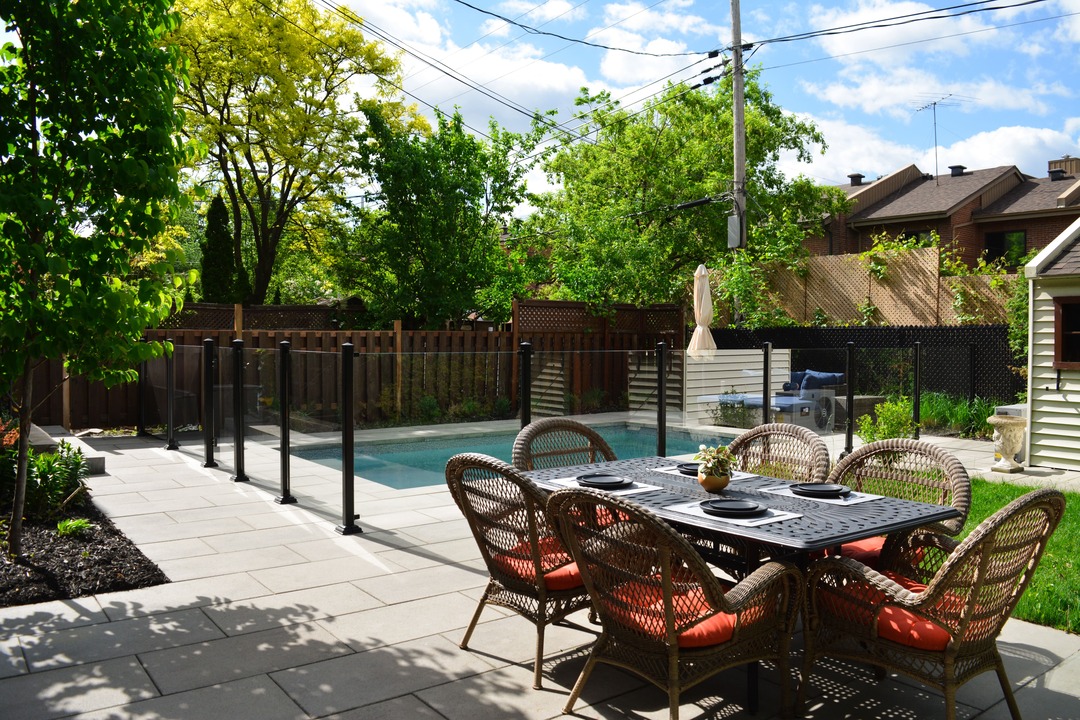
4 Essential Checks Before Paying a Landscaper’s Deposit
1. Written Proof of Liability Insurance
Liability insurance covers accidental damage that can occur during the work: a punctured water line, damage to an adjacent structure, a neighbour’s fence hit by machinery. These aren’t rare scenarios on a landscaping site, where crews excavate, grade and move equipment close to foundations and underground utilities.
A verbal answer like “yeah, yeah, we’re insured” is worth nothing. Ask for the written document, valid for the current year, and make sure the company name on it matches exactly the name on the contract you’re about to sign.
2. A Written, Detailed and Dated Warranty
A verbal promise has no legal value. What counts is a written document that specifies how long the warranty lasts (for example, two years) and exactly what it covers: installation, materials, settling, joint separation, and so on.
A good written warranty doesn’t need to be complicated, but it does need to be specific. If a contractor hesitates to put in writing what they’re telling you verbally, that’s generally a red flag worth taking seriously.
3. A Registered Business With a Verifiable Physical Address
Check that the company has a valid registration number and that a real head office exists, not just a Facebook page or a cell phone number. This information is usually easy to confirm in public registries. A company that refuses to share it, or simply has no traceable legal existence, should never receive a deposit.
4. Recognized, Verifiable Certifications
Some certifications, such as Techo-Bloc’s Techo-Pro, come with concrete requirements: mandatory annual training, confirmation that insurance is valid, and a written warranty applied directly to certified products. This type of certification isn’t just for show; it imposes oversight that a contractor can’t easily get around.
These certifications, along with awards like Consumer Choice, can be verified directly on the issuing organization’s website. You can also review the details of our own insurance and warranties on our About Us page. If a contractor displays them on their website but you can’t find them anywhere else, it’s worth asking one more question before signing.
Why Two Quotes for the Same Project Can Differ by Up to Double
It’s a question we hear often: how can two companies quote such different prices for what looks like the same project? The answer usually comes down to two structural factors.
Finishing Time, Often Invisible on Paper
On a paver project, for example, finishing work can account for up to 30% of the total time on a job done by the book: fine compaction of the soil and base, completely filling the joints with polymeric sand, and carefully installing edge restraints. These steps aren’t necessarily visible to the naked eye on handover day, but they largely determine how well the installation holds up over the following years, especially through the freeze-thaw cycles typical of Quebec winters. Take a look at our completed projects to see the difference careful finishing makes.
A much lower price often hides cut corners on finishing. It isn’t always visible right away, but it eventually shows up as joints washing out or a surface that warps after one or two winters. If you’re interested in the topic, our other articles explain in more detail why slight paver movement isn’t necessarily a defect, and when waves that appear after winter point to an installation problem instead.
Operating Costs That Are Part of a “Serious” Price
A company that keeps its insurance up to date, offers written warranties, trains its crews every year and maintains its safety equipment carries real operating costs. Those costs are reflected in the price. That isn’t necessarily a reason to automatically pay more, but it is a reason to be wary of a large price gap with no clear explanation.
Contractor Checklist
Before signing a contract or paying a deposit, take a few minutes to tick off each of these items:
- Does the company have a registration number and a verifiable physical address?
- Have you received a certificate of liability insurance that is valid for the current year?
- Is the warranty provided in writing, with details of what it covers?
- Does the contractor hold a certification that is renewed annually (for example, Techo-Pro)?
- Can the awards they mention (for example, Consumer Choice) be verified on the independent organization’s website?
- Does the company have positive Google reviews going back several years?
If even one of these boxes doesn’t get a clear answer, it’s not necessarily a reason to turn down the project, but it’s certainly a reason to ask the question directly before going any further.
In Summary
Price is never the only factor to consider when choosing a landscaper, especially in an industry where nobody is legally required to hold a licence. The four checks covered here (insurance, written warranty, legal registration and certifications) take little time, but they make all the difference between a completed project and a lost deposit.
At Paysagement Duguay, we see this vigilance as part of a relationship of trust with our clients. Feel free to contact us to discuss your project before you commit!